RCCBs, RCBOs, MCBs and ELCBs all appear in UAE distribution boards, but they protect against different faults. Here is what each one does, how sensitivity and type are chosen, and how to combine them.
Two different kinds of fault
An electrical circuit can fail in two ways that a protective device has to handle differently. Overcurrent — an overload or a short-circuit — means too much current flows through the live conductors, and a miniature circuit breaker (MCB) or moulded-case breaker (MCCB) trips on it. Earth leakage means a small current escapes to earth through damaged insulation, moisture or a person, so the live and neutral currents are no longer equal. That current can be far too small for an MCB to notice, yet still be lethal or start a fire, and it is detected by a residual-current device (RCD). The four names in this article are really two functions — overcurrent protection and residual-current protection — packaged in different ways.
MCB, RCCB, RCBO and ELCB in one paragraph each
An MCB (IEC 60898-1) protects cable and equipment against overload and short-circuit using a thermal-magnetic trip; it does not detect earth leakage. An RCCB (IEC 61008) is a residual-current circuit breaker: it compares the current in the live and neutral conductors and trips when the difference — the leakage — exceeds its rating. It gives no overload or short-circuit protection, so it always needs an MCB or fuse in series, within the maximum back-up rating the manufacturer states. An RCBO (IEC 61009) is an RCCB and an MCB in one device, giving earth-leakage and overcurrent protection on a single circuit. ELCB is an older term: the original voltage-operated ELCB is obsolete, and today the label "ELCB" is usually printed on what is really a current-operated RCCB, which is why the words are used interchangeably in Gulf trade.
Sensitivity: 30 mA, 100 mA or 300 mA
The rated residual operating current decides what an RCD protects. At 30 mA it is intended as additional protection against electric shock, which is why most project specifications ask for it on socket-outlet circuits, bathrooms, kitchens, outdoor and wet-area circuits. Devices rated 100 mA or 300 mA are not shock protection; they are used higher up the installation for fire protection and earth-fault protection of feeders, often as time-delayed (selective, S-type) devices so that a fault on a final circuit trips the 30 mA device first and leaves the upstream device on. Always follow the consultant's specification and the requirements of the supply authority for your project.
RCD types: AC, A, F and B
The type tells you which kinds of leakage current the device can detect. Type AC responds only to sinusoidal AC leakage. Type A also detects pulsating DC, which is produced by many electronic loads such as rectifiers, dimmers and switch-mode supplies, so it is a common minimum for modern buildings. Type F adds tolerance for the mixed-frequency leakage of single-phase inverter-driven equipment. Type B also detects smooth DC leakage, the kind produced by three-phase variable-frequency drives and by some EV chargers and solar inverters. A Type AC device in front of such a load may not trip when it should, so match the type to the equipment and follow the equipment manufacturer's installation manual.
RCCB or RCBO: which to use on each circuit
One RCCB can protect a group of MCB-protected circuits, which is economical, but a leakage fault on any circuit trips the whole group. An RCBO protects each circuit individually, so a fault in one circuit leaves the others running — valuable for refrigeration, IT and cold-room circuits where an unnoticed trip spoils stock or data — and it also gives overload and short-circuit protection in the same device. RCBOs cost more and take a little more panel space, which is why boards often use a mix: RCBOs for critical or high-leakage circuits and RCCB-plus-MCB groups elsewhere. If you use an RCCB, make sure its rated current is not lower than the load it carries and that it is protected by an upstream breaker no larger than the maker's stated maximum.
Avoiding nuisance trips
Nuisance tripping is usually a symptom, not a faulty device. Every electronic load — LED drivers, EMC filters, computers, inverters — leaks a few milliamps to earth by design, and the leakage of many loads adds up on one RCD. The usual fixes are to spread circuits across more RCDs or RCBOs, never to share a neutral between circuits protected by different RCDs, to check insulation resistance before energising a new or repaired circuit, to keep enclosures and cable entries dry, and to use selective or surge-resistant types where surges are a problem. Press the test button periodically, as the manufacturer recommends, so that a device that has stopped working is found before it is needed.
How this looks in a typical UAE distribution board
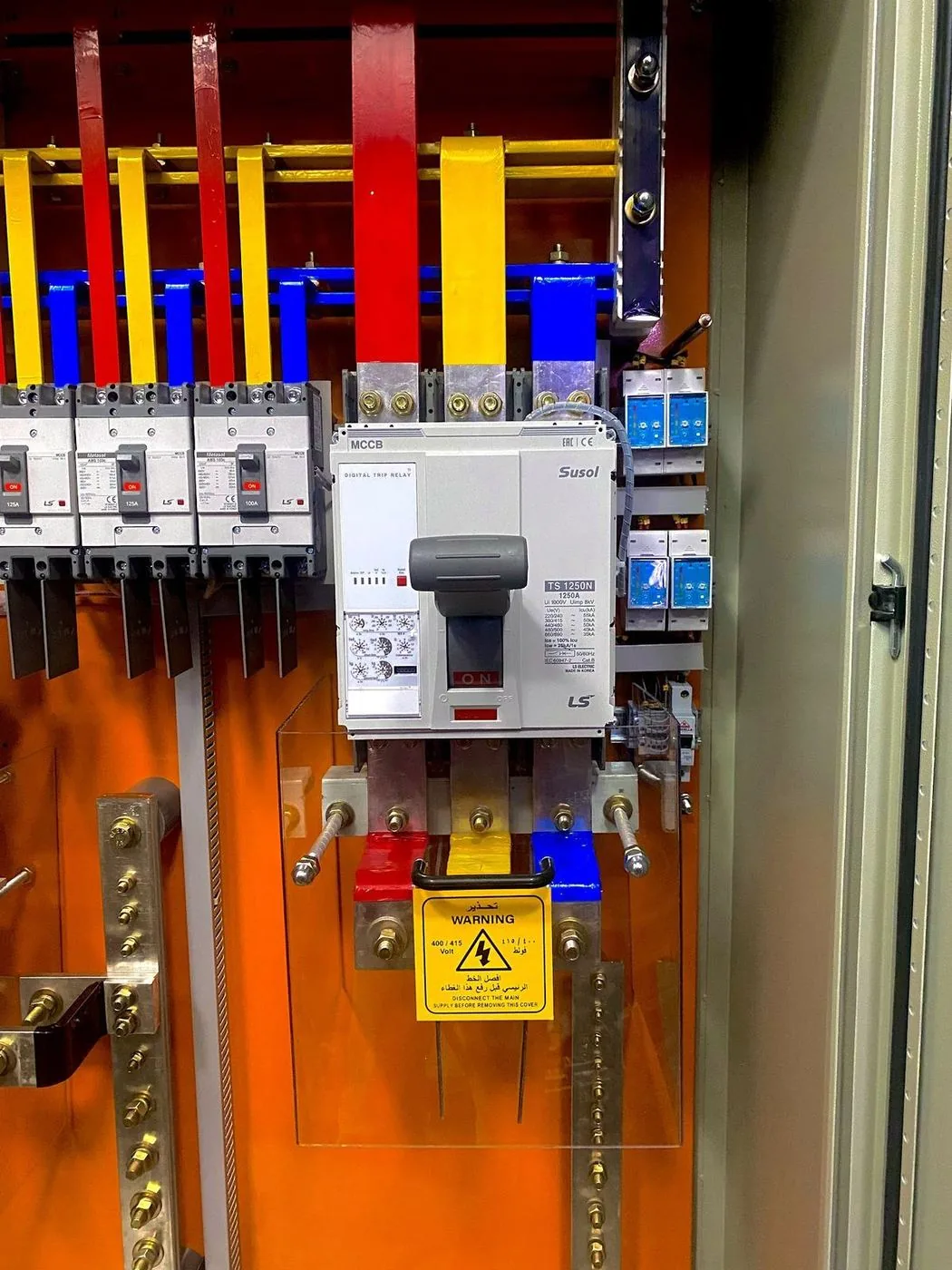
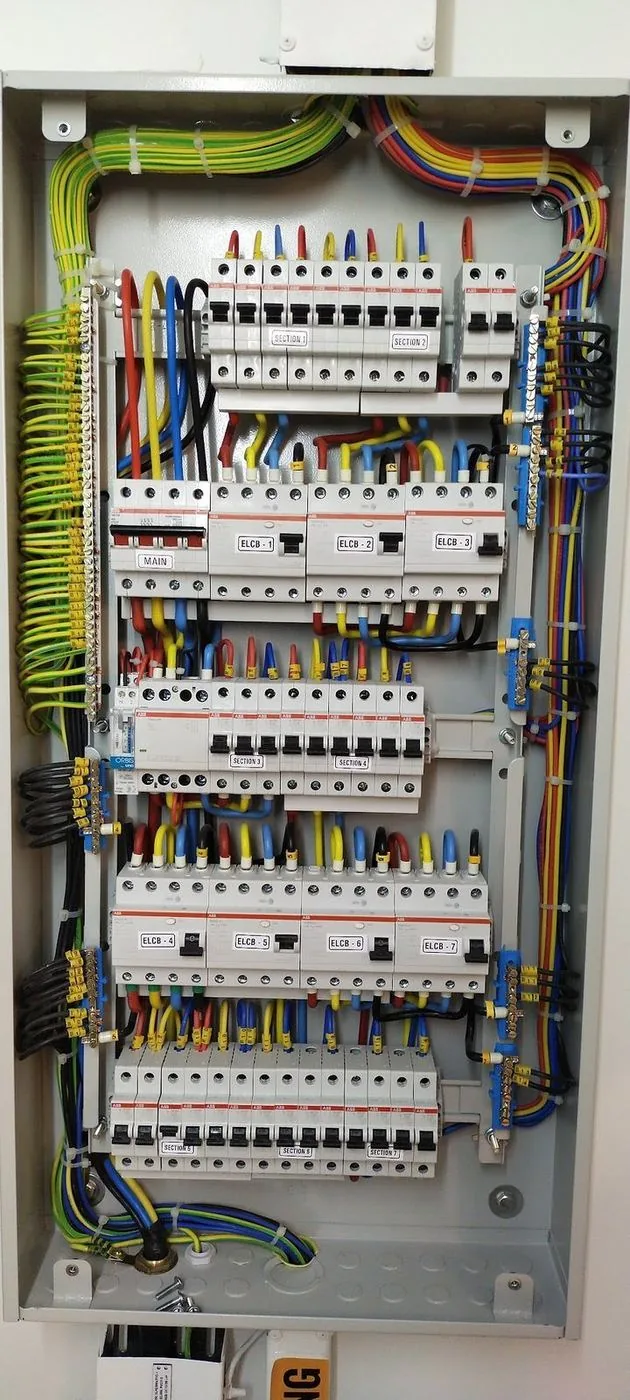
A typical final distribution board has an incoming isolator or MCCB, a busbar and outgoing ways: lighting on MCBs, socket-outlet and water-heater circuits on 30 mA RCBOs or on RCCB-protected MCB groups, air-conditioning on MCBs or MCCBs as the load requires, and any critical circuit on its own RCBO. Where several boards are in series, an upstream 100–300 mA selective RCD can provide fire protection while 30 mA devices handle shock protection on the final circuits. Al Misbah Al Sehri builds MDB, SMDB and FDB boards in Dubai and supplies genuine ABB, Schneider Electric, Legrand and Hager earth-leakage devices — send us your load schedule and single-line diagram and we will propose a protection scheme for your approval.