A practical annual maintenance checklist for LV distribution boards, MCC and ATS panels in the UAE — safety, thermography, torque checks, breaker and relay testing, cleaning and records — and when to call a specialist.
Why annual maintenance matters in the Gulf
LV panels work in a hard environment: high ambient temperature, dust and sand, humidity and condensation and, on some sites, coastal salt air or vibration. Heat cycling slowly loosens bolted joints, dust and moisture can track across insulation, and fans and filters clog. The result is usually not a sudden failure but a creeping one: a loose lug runs hot, the insulation darkens and one day a breaker trips or a phase is lost. A short, planned annual inspection costs far less than an unplanned outage, and it is often a condition of insurance or of a facility's maintenance contract.
Before you start: isolation and safety
Treat every maintenance task as electrical work with serious hazards, including shock and arc flash. Work under a permit-to-work, isolate the supply, apply lock-out/tag-out, prove the circuit dead with an approved tester, and earth where required before touching any conductor. Wear PPE appropriate to the arc-flash assessment, keep doors and covers on while the panel is live, and let only competent, authorised persons do the job. Some checks, such as thermography, are done with the panel energised by qualified staff using inspection windows or following site procedures; everything else is done isolated. Always follow the manufacturer's manuals and your site's electrical safety rules.
Visual and environmental inspection
Start with what you can see. Look for corrosion, damaged paint, door seals and gaskets that no longer seal, missing blanking plates or knock-outs, and unused cable entries that are not closed. Check that labels are legible and that the single-line diagram on the door matches the panel. Make sure nothing is stored in the switch room, that ventilation fans run and their filters are clean, that anti-condensation heaters work, and that the room temperature is within limits. Signs of moisture, rodent entry, discolouration or a burnt smell are reasons to stop and investigate before going any further.
Thermography and terminations
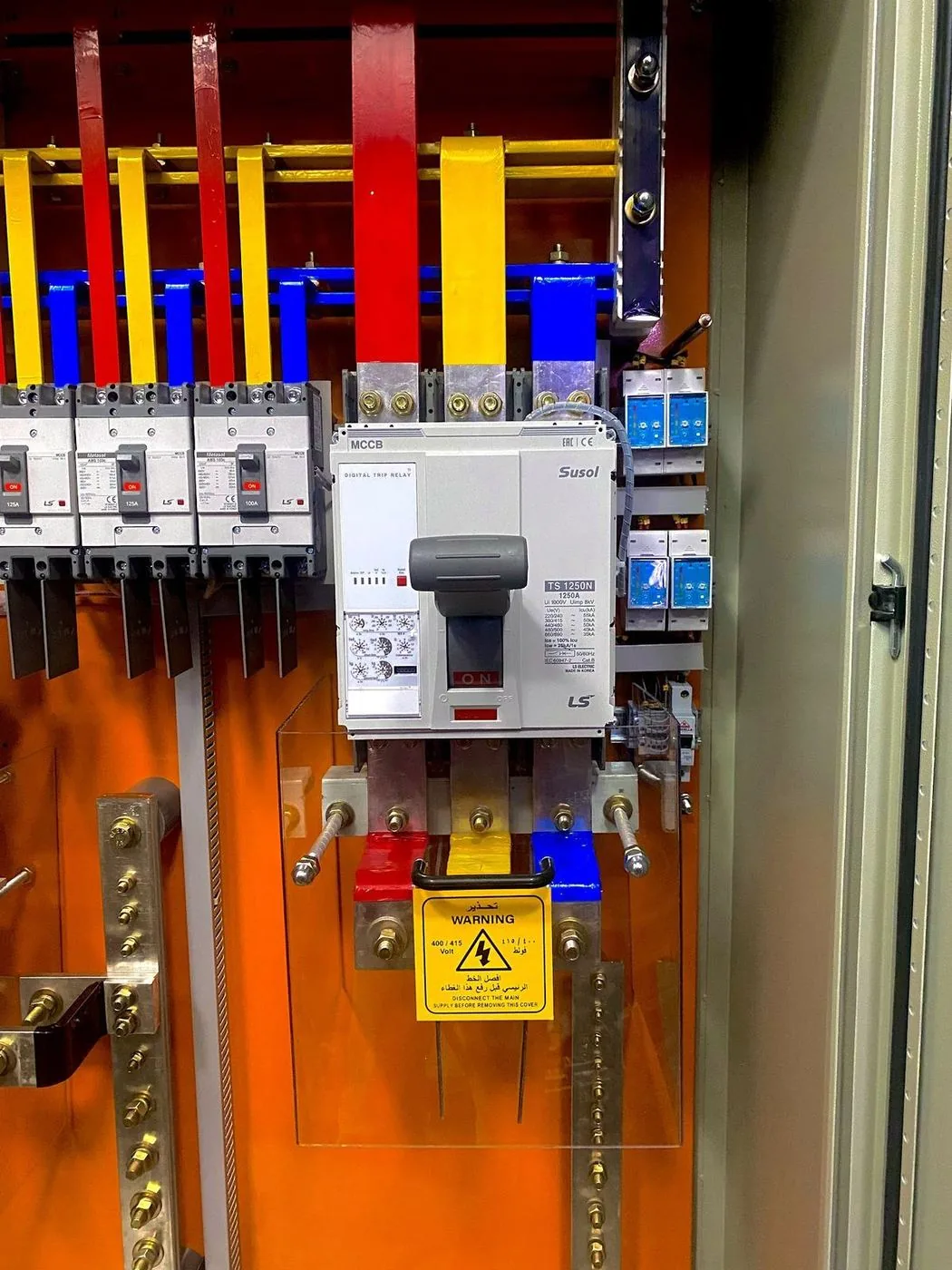
An infrared survey of the panel under normal load is the quickest way to find a developing fault: compare the temperature of the three phases at each joint, lug and breaker terminal, and look for any that is hotter than its neighbours. Survey when the load is representative — a lightly loaded panel can hide a bad joint. Then, with the panel isolated, check the tightness of bolted busbar joints and cable terminations with a calibrated torque tool set to the value given by the manufacturer for that device; do not rely on feel or on generic values. Mark checked joints with torque paint so that the next inspection can see at a glance whether anything has moved.
Breakers, relays and control circuits
Operate each breaker and switch several times to keep the mechanisms free, and inspect for signs of overheating, pitting or damage. For air and moulded-case breakers, follow the maker's schedule for testing the trip unit; electronic trip units and protection relays should be tested by a competent person with secondary-injection equipment, and their settings compared with the protection study. Test residual-current devices with both their test button and a proper RCD tester. Check contactors for worn or pitted contacts, overload relay settings against each motor's full-load current, and control fuses, indicator lamps and meters. If the panel uses voltage and phase-failure relays such as the Multispan VPR-22U or SVR-22U, confirm that their set-points are still correct.
Cleaning, insulation and earthing
With the panel isolated, vacuum dust from busbar chambers, breaker compartments and vents; do not blow it out with compressed air, which drives dust into mechanisms. Clean insulators and barriers with an approved cleaner and replace damaged ones. Measure insulation resistance on busbars and cables using the correct test voltage, with sensitive electronics and surge protectors disconnected as the procedure requires, and check the continuity of earth connections and bonding. Replace worn gaskets, filters and any component showing damage rather than waiting for the next inspection.
Records and when to call a specialist
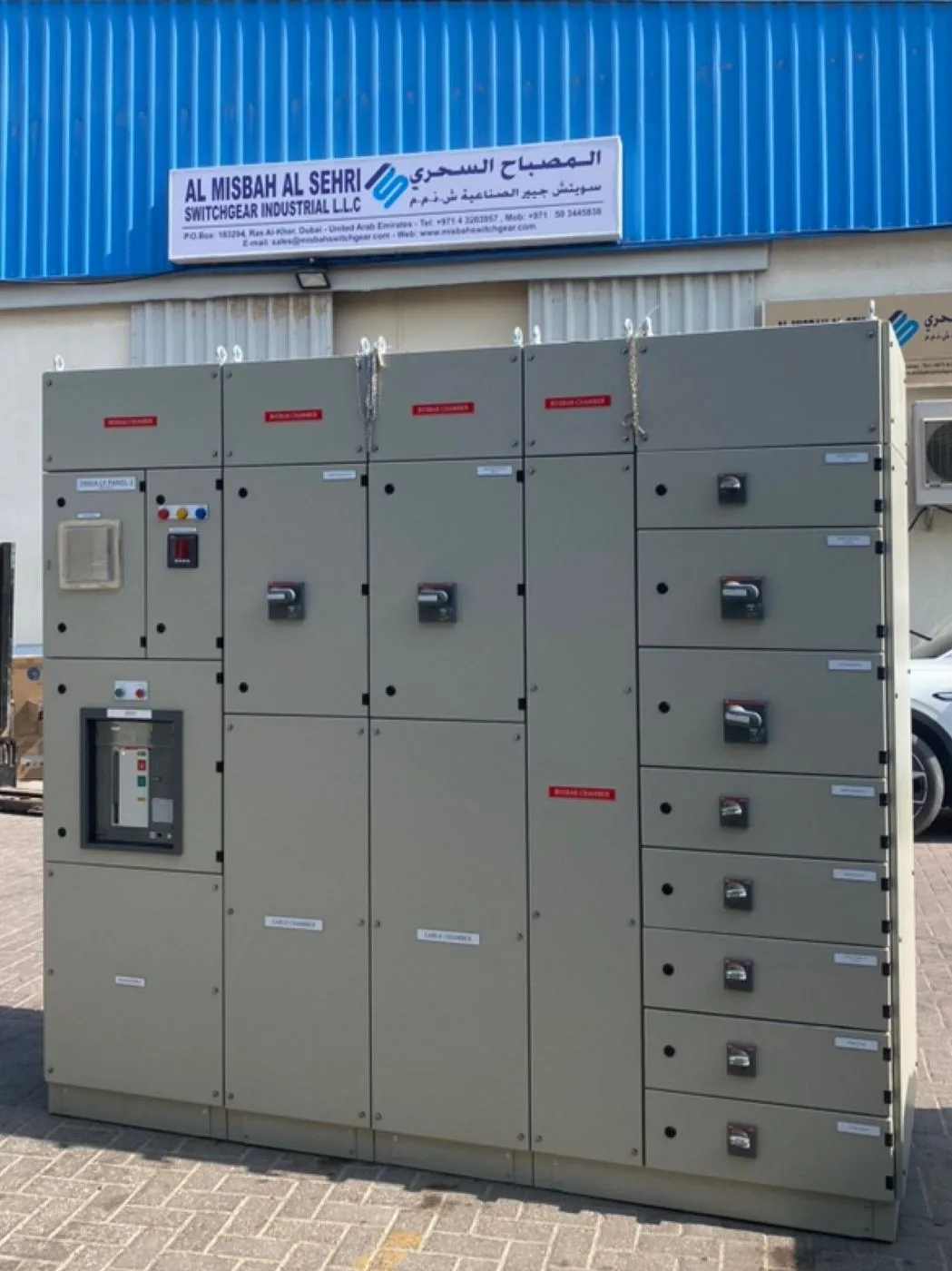
Write down what you found: thermography images, torque checks, test results, settings, replaced parts and the date of the next inspection, and update the labels and single-line diagram if anything changed. A history of results is the best way to spot trends and to justify a retrofit. Bring in a specialist when you see repeated nuisance trips, hot spots that return after re-tightening, ageing breakers for which spares are no longer available, or a panel that has run out of capacity or needs new VFD, PLC or ATS functions. Al Misbah Al Sehri offers panel modification, servicing and fault finding — send us the panel details and photographs and we will advise on the next step.