A practical guide to motor control centre wiring for UAE plants — DOL and star-delta starters, overload and motor protection, busbar arrangement, and where Multispan relays fit.
What a motor control centre actually does
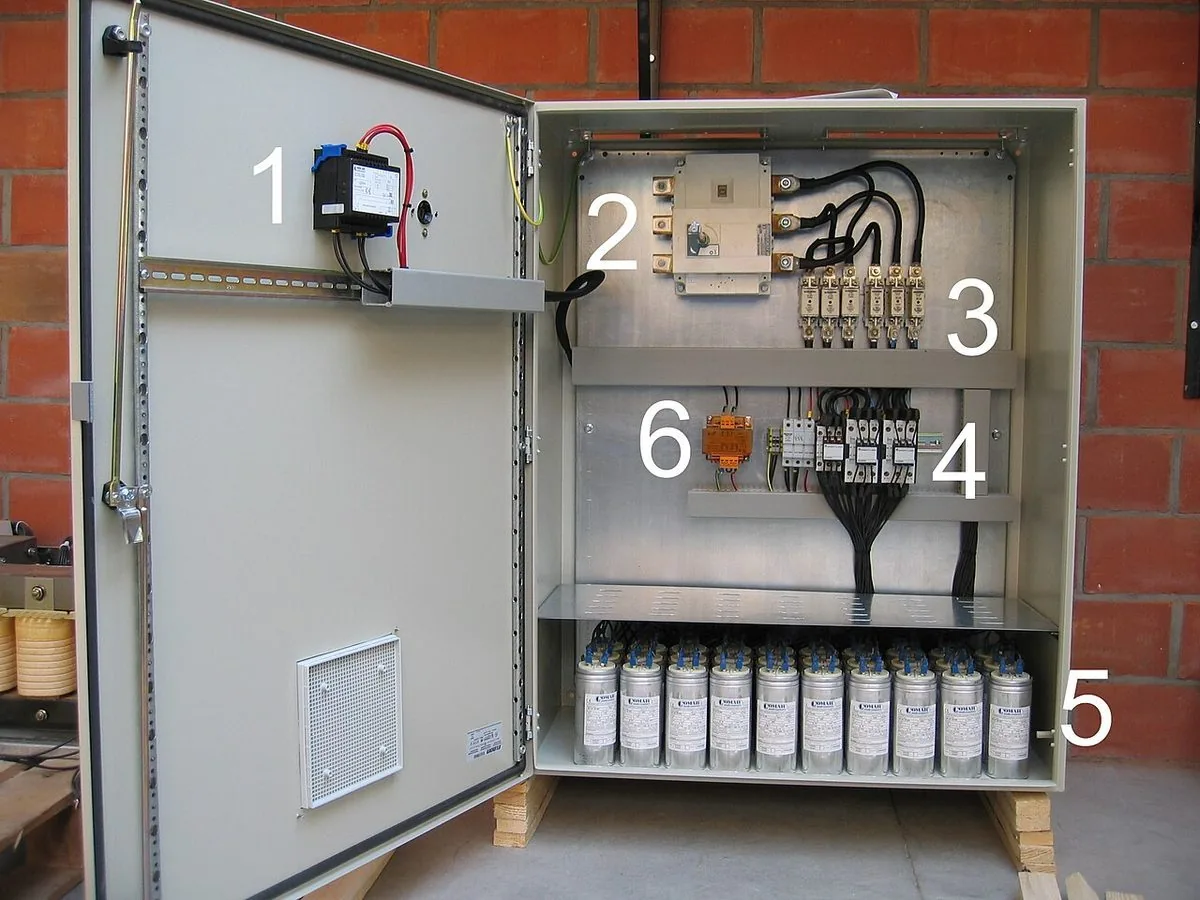
A motor control centre (MCC) is a single assembly that houses the starters, protection and control for many motors — pumps, fans, chillers, compressors — feeding them from a common busbar. Rather than scattering individual starters around a plant, the MCC groups them in one metal-clad cabinet with a horizontal main bus and vertical droppers to each cubicle. Every motor gets its own compartment (a "bucket" or fixed module) containing an isolator or MCCB, a contactor, an overload or motor-protection relay, and control terminals. For UAE plants built to IEC 61439 and DEWA requirements, this arrangement keeps fault levels, segregation and maintenance access predictable, and lets one motor be isolated without shutting the rest of the line down.
Direct-on-line (DOL) starter wiring
The DOL starter is the simplest circuit: an MCCB or fuse-switch for short-circuit protection, a contactor to switch the motor, and an overload relay to protect against sustained overcurrent. In the power circuit, three phases pass through the contactor main poles and the overload heater elements to the motor terminals. The control circuit energises the contactor coil through a start pushbutton (held in by a normally-open auxiliary contact for latching), a stop pushbutton, and the overload's normally-closed trip contact wired in series. DOL is fine up to roughly 7.5 kW, where the 6-8x starting current inrush is acceptable to the supply. Above that, DEWA and most consultants require a reduced-voltage method to limit voltage dip on the network.
Star-delta starter wiring
A star-delta starter cuts starting current by first connecting the motor windings in star (each winding sees phase voltage, about 58% of line), then switching to delta for full running torque. It uses three contactors — main, star and delta — plus a timer that controls the changeover, typically after 5-15 seconds. The star and delta contactors are mechanically and electrically interlocked so they can never close together, which would cause a phase-to-phase short. All six motor winding ends (U1-U2, V1-V2, W1-W2) must be brought out to the panel. Star-delta suits pumps and fans that start unloaded; it roughly cuts inrush to a third of DOL, easing the burden on the incoming supply.
Overload and motor protection
Every starter needs overload protection set to the motor full-load current (FLA) from its nameplate. A basic thermal overload relay uses bimetallic strips that bend with heat and trip the control circuit; it is cheap and adequate for straightforward loads. For critical or expensive motors, an electronic motor-protection relay does far more: true-RMS current sensing, adjustable overload class, single-phasing and phase-imbalance detection, earth-fault, locked-rotor and under-load protection, plus a settable trip class matched to the motor's thermal curve. In a star-delta circuit the overload is usually placed in the motor winding path (in-delta), so its setting must be scaled to line current divided by root-three. Correct CT ratio and setting are what separate genuine protection from nuisance tripping.
Busbar arrangement and segregation
The backbone of any MCC is its busbar system. A horizontal main busbar runs the width of the cabinet, sized for the total load and the prospective short-circuit current, with vertical busbars dropping into each column to feed the individual motor modules. Bars are tinned or silver-plated copper, supported on insulators rated for the fault level and braced to survive the electromagnetic forces of a short circuit. IEC 61439 defines internal separation forms (from Form 1 to Form 4b) that determine how far busbars, functional units and terminals are segregated by barriers — higher forms allow safer maintenance on one section while others stay live. A continuous earth bar and neutral bar run alongside, and every module bonds back to the earth bar for a low-impedance fault path.
Where Multispan relays fit in the MCC
As the authorized Multispan distributor for the UAE and GCC, we specify Multispan motor-protection and monitoring relays across many of the MCCs we build. Multispan offers current-based motor-protection relays with adjustable overload, single-phase preventer and phase-failure functions, dedicated phase-sequence and voltage-monitoring relays, and timers for star-delta changeover — the working parts of a reliable starter. Because they are DIN-rail mounted and clearly configurable, they suit both new panels and retrofits where an ageing bimetallic overload is upgraded to electronic protection. Multispan has manufactured control and protection instruments since 1986, and we hold genuine stock for fast delivery across all seven emirates.
Control wiring, labelling and testing
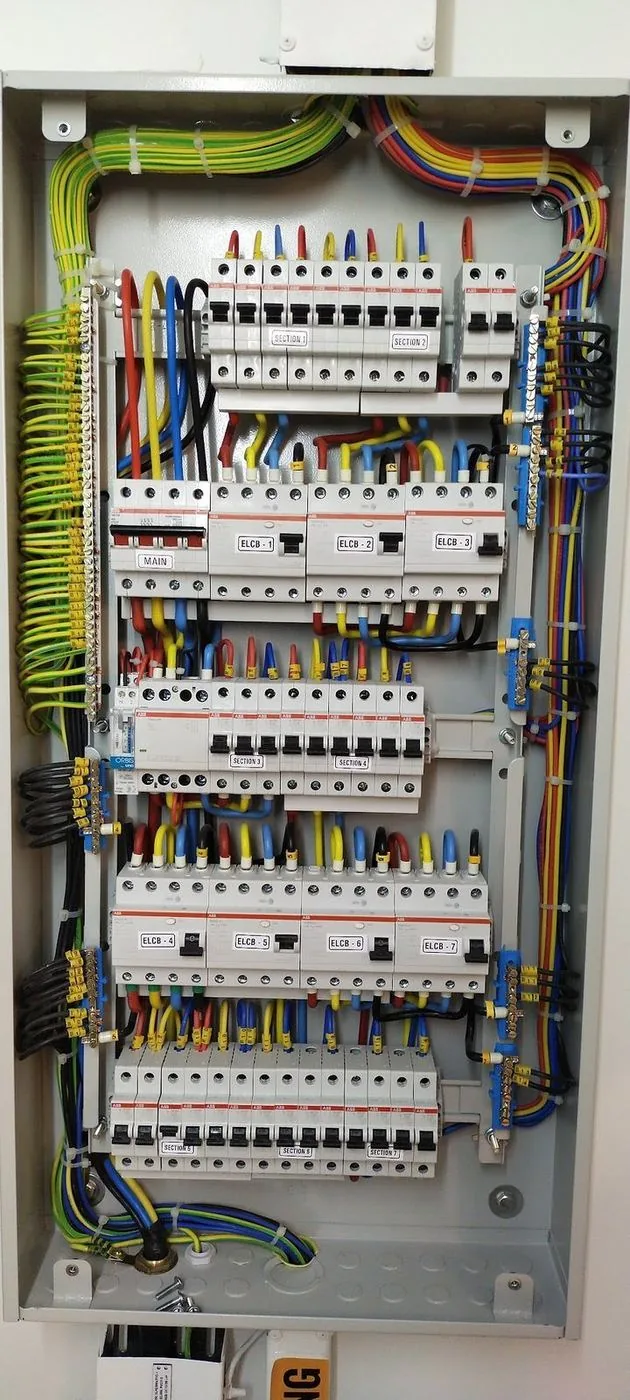
Good MCC wiring is disciplined as much as electrical. Control wiring is run in trunking separated from power cables, ferruled and numbered to match the schematic, and terminated on DIN-rail terminals so faults can be traced without guesswork. Each door carries pushbuttons and indicator lamps (run, trip, supply-healthy) wired back through the module. Before energising, the panel is checked for continuity, correct phase sequence, insulation resistance, torque of every busbar and terminal connection, and functional testing of each starter's start, stop, overload trip and interlock. We build, wire, label and factory-test each MCC to your single-line diagram and the applicable IEC and DEWA standards before it leaves the workshop, then commission it on site.